THG Energy:
Bridging Legacy and Innovation in Energy Intelligence
THG Energy Solutions partnered with us to initiate a digital transformation of its core energy management systems. The collaboration, detailed in our original announcement, was formed around a shared vision: to modernize THG’s technology ecosystem and streamline its energy intelligence offerings into one unified, high-performing platform.
We began with a discovery and due diligence phase, mapping technical and operational challenges such as fragmented data flows and UI complexity. This led into a structured product design phase focused on three core systems: the customer portal, internal database platform, and administrative interface.
To ensure continuity, we also took over their .NET-based infrastructure, assembling a cross-functional team to maintain and enhance legacy systems alongside the new build. This case study explores how we’ve balanced short-term system optimization with long-term transformation planning, delivering incremental value while preparing for scalable innovation.
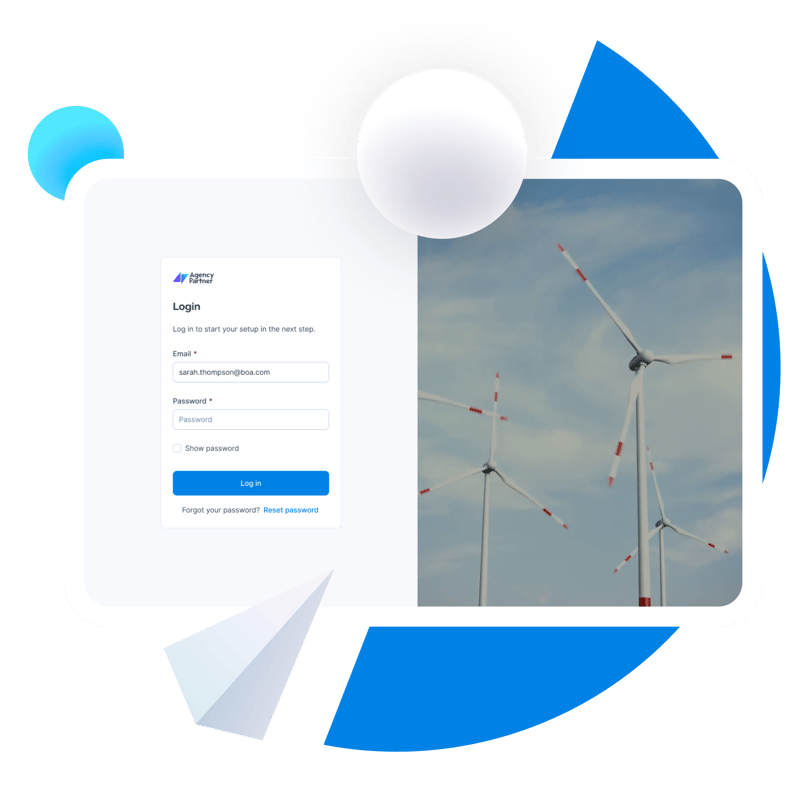
About THG Energy Solutions
THG Energy Solutions is a U.S.-based energy technology provider delivering advanced utility intelligence across the commercial and industrial energy market. Headquartered in Dallas-Fort Worth, Texas, the company specializes in transforming complex utility data into actionable insights that drive operational efficiency, cost savings, and sustainability outcomes.
THG’s value proposition centers around data-driven energy management. Their solutions optimize the collection and reporting of utility invoices, interval data, and emissions metrics, supporting practical sustainability practices and informed decision-making.
In 2024, THG received a majority investment from Wise Advisors, positioning it for accelerated expansion and deeper industry impact. The funding aims to enhance THG’s ability to deliver industry-leading sustainability reporting, utility data integration, and energy management services
Rebuilding the Customer App and Evolving the Legacy Platform
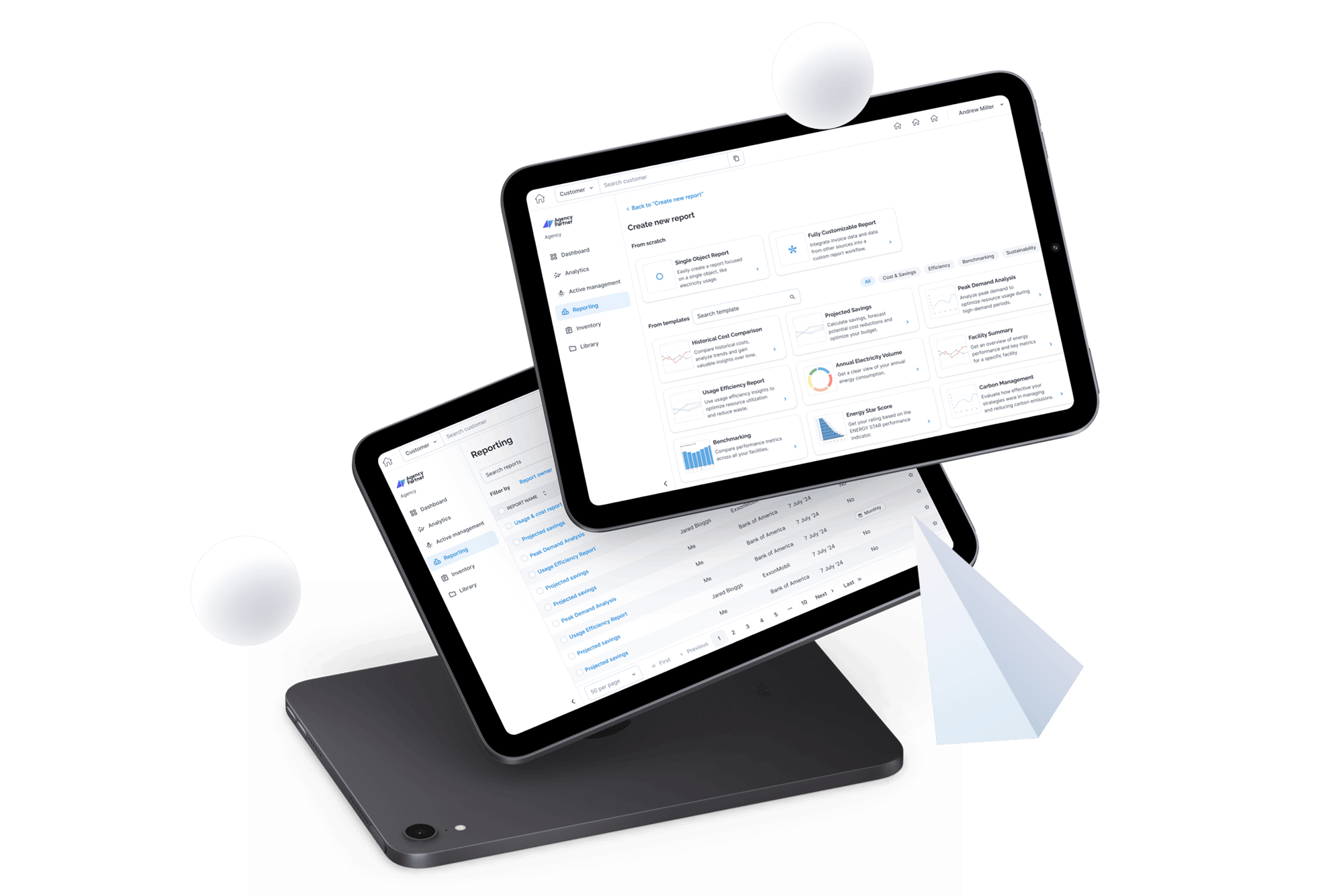
Our collaboration with THG unfolds across two major initiatives. The first is a comprehensive redesign of their customer-facing web application, aimed at improving the user experience without disrupting backend operations. The second involves modernizing and maintaining THG’s core legacy systems, including platforms responsible for data ingestion and energy reporting.
Together, these efforts reflect a balanced strategy—delivering short-term improvements while laying the foundation for scalable, future-ready energy intelligence solutions. The next sections break down each project, starting with the rebuild of the customer platform.
I. Rebuilding the customer-facing app
THG Energy aimed to modernize its existing platforms by redesigning the user interface to be more intuitive and accessible, while retaining the existing backend logic and database structures. The goal was to improve usability and visual clarity without introducing significant changes to core functionality.
We began with a focused initial scope but maintained a long-term perspective aligned with THG’s strategic goals. The starting point was a three-month product design phase. During this period, we conducted a comprehensive assessment of THG’s existing systems to identify business-critical success factors, uncover operational challenges, and pinpoint areas for improvement. This included addressing specific industry requirements, mapping user journeys, and analyzing the current technology stack to ensure that any proposed solution would both resolve present limitations and support future growth.
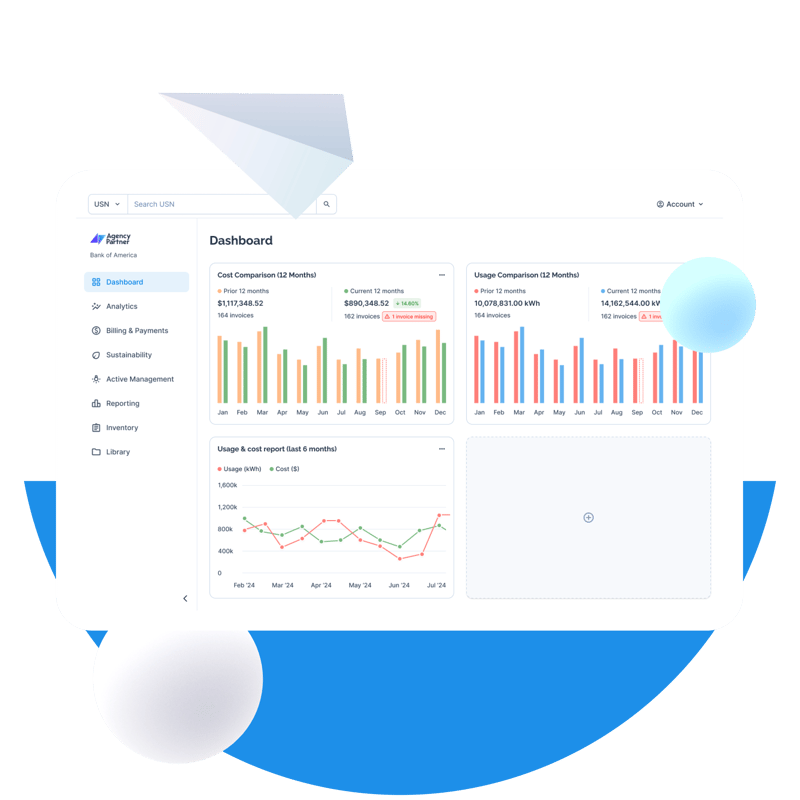
Following product design, we moved directly into development, guided by a structured release management plan aligned with THG’s strategic priorities and user behavior.
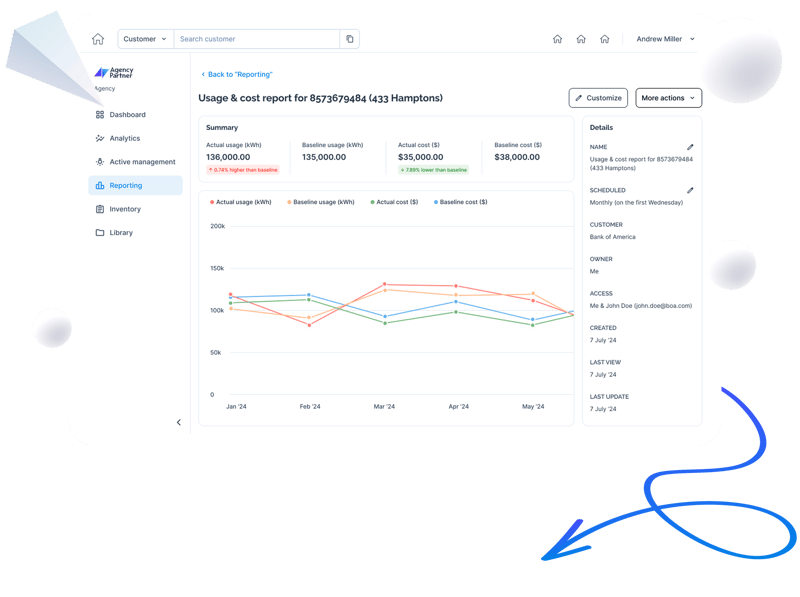
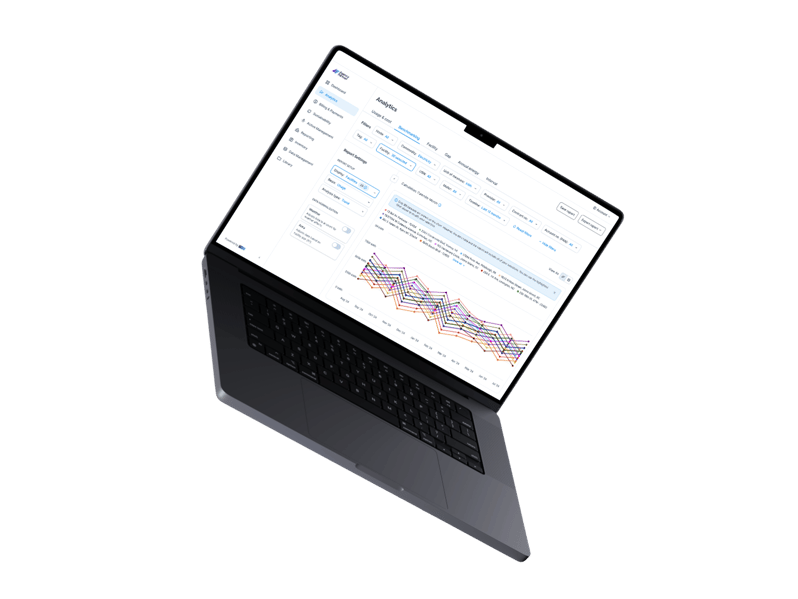
Eleven months into the project, we have three fully functional reporting modules live in production: Analytics, Global Filter, and Payable Summary. The look and feel of the application have been entirely reimagined, and development continues on schedule to meet the client's objectives.
The challenge:
Redesigning without rebuilding the backend
How can we reconstruct a customer-facing web application that feels modern, intuitive, and relevant, while working within the constraints of an existing backend architecture and making only incremental functional improvements?
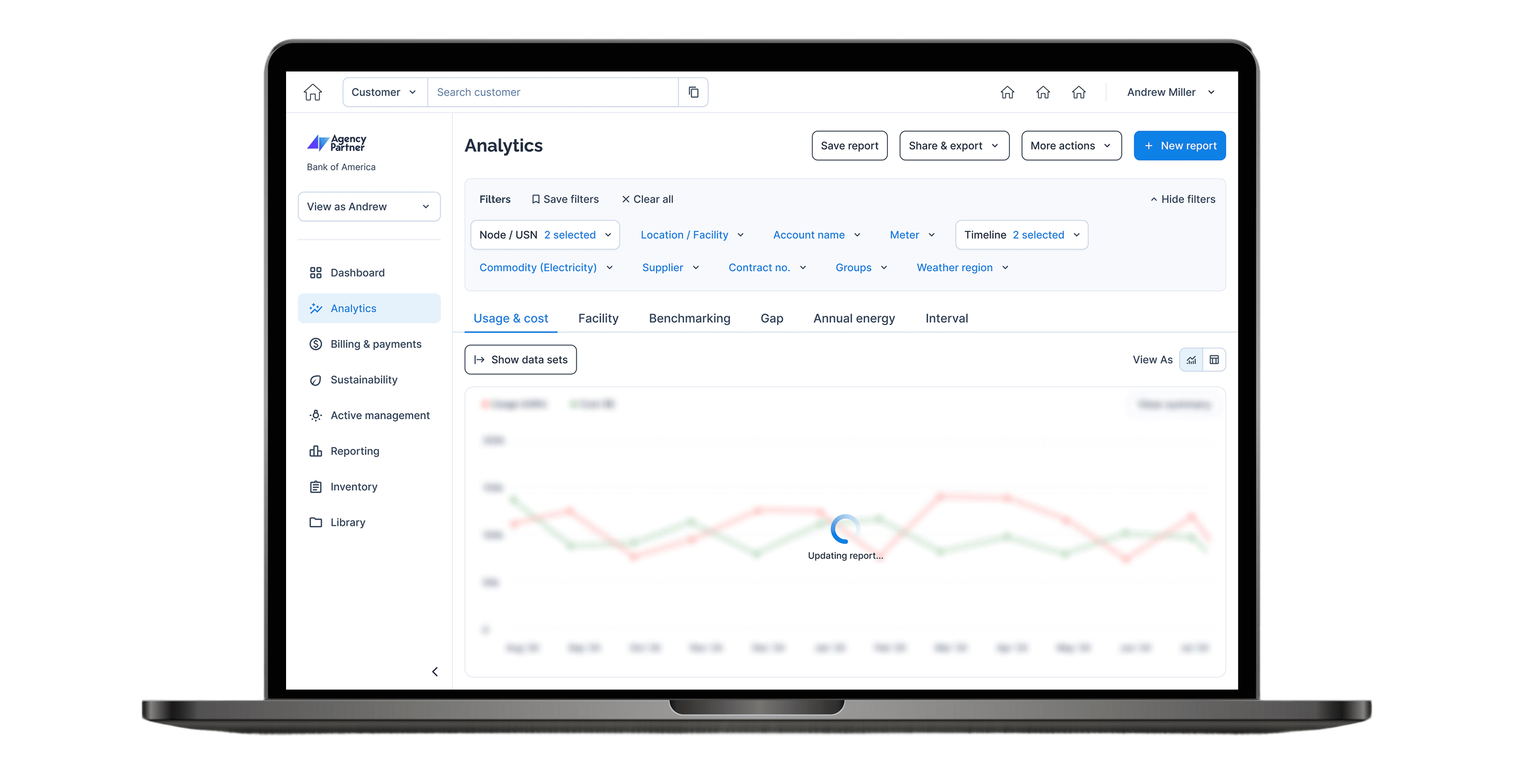
Our approach to UX redesign and frontend modernization
To help THG advance its vision of becoming the "Microsoft Excel for energy data", we began by working backwards from the desired outcome, clarifying what success would look like, and mapping the steps needed to get there.
The first step was a structured product design phase, which served as a strategic entry point for aligning business needs with user expectations and technical feasibility. This was followed by development, executed by a dedicated end-to-end product team: frontend and backend engineers, a QA specialist, a UI/UX designer, and a project manager.
We adopted a delivery model focused on incremental progress and continuous alignment. Early efforts centered on prioritizing high-value features, understanding interdependencies, and generating accurate effort estimates to guide execution. Our delivery cycles are structured around two-week sprints: we implement the most critical features first, validate progress in close collaboration with THG, and plan upcoming work based on evolving priorities.
Throughout the process, we’ve consistently applied agile principles to remain adaptable, adjusting the scope and sequencing as needed. We apply engineering best practices, including pair programming, rigorous code reviews, peer evaluation of features, and a combination of manual and automated testing, to ensure quality and maintain momentum. This disciplined yet flexible approach is designed to deliver the best possible outcomes within a realistic timeline.
-
-
-
"I’ve started demoing the app to our account managers. It’s one thing to see some pictures, it's another to actually use it. People are very interested, and impressed. It works so smoothly. I can navigate through reports without delay, payables summary loads very fast. The difference is night-and-day."
-
Jordan Wheelerformer Product Director,THG Energy Solutions
"‘Overall, I am very happy with the redesign effort. Two quarters ago we were still onboarding new team members and performing knowledge transfer sessions, and today we have a usable portal with active customer engagement. Our current product state was due to a monumental effort by the team and I congratulate them on their success so far. I am confident that we can continue with this productive pace given the demonstrated talent on our team and I look forward to a long relationship with this group."
Technology stack and architecture for the rebuilt platform
Delivery process and design impact
Our delivery approach prioritized clarity, consistency, and adaptability. We set up a structured workflow and clear stakeholder alignment to ensure timely decisions and transparent communication.
By combining strategic planning with agile execution in two-week sprints, we balanced immediate deliverables with long-term goals, enabling frequent validation, focused iteration, and steady progress.

6 & 1

2253

1890
3695
135
These outputs formed the foundation for a design system that ensured consistency across the application while remaining flexible to support ongoing iteration.
Throughout 20 sprints and more than 650 completed story points, we delivered key functionality, including:
- Redesigned Customer Dashboard with usage and cost insights
- 3 most-used reports rebuilt with advanced UI (line/area charts and data tables)
- Export functionality implemented across all reports
- 1 global filtering system applied consistently across report types
- 1 customizable reporting feature allowing users to save filter settings
- 2 integrated tools: user analytics (Heap) and performance monitoring (Sentry)
II. Stabilizing and evolving the legacy platform
While planning the rebuild of its customer-facing app, THG also needed to maintain and enhance its legacy platforms, critical tools supporting real-time insights for enterprise clients. In December 2024, our role expanded to include direct development and support of these systems.
We onboarded two senior developers to assess the setup, identify improvements, and refine the delivery process. Within a month, the team scaled to a full squad: .NET developers, a QA engineer, and a project manager. Taking over from a decade-long incumbent, we ensured a smooth transition through parallel work, structured knowledge transfer, and close coordination with THG stakeholders.
Our team took charge of two key systems:
- EIS (Energy Intelligence Suite): THG’s core reporting and analytics platform
- TUX: The ingestion engine handling utility invoice data from multiple sources
These platforms remain foundational as THG advances toward its goal of becoming the “Microsoft Excel for energy data.” Our focus is on maintaining performance and stability while enabling long-term transformation.
The challenge:
Supporting mission-critical systems while modernizing
Our approach to legacy system maintenance and evolution
To help THG sustain and evolve its legacy systems, we focused on creating a stable delivery framework and aligning technical execution with two core mandates: platform maintenance and technical evolution, as well as day-to-day operational support. Our goal was to ensure uninterrupted system performance while progressively modernizing the platform's components to prepare for long-term scalability.
We structured our work around a continuous delivery rhythm, emphasizing collaboration with key THG stakeholders and resolving issues proactively. By combining agile practices with deep system understanding, we were able to support both strategic enhancements and immediate operational needs.
Platform maintenance & technical evolution
Our development efforts focused on stabilizing and improving core performance while addressing long-standing technical debt:
- Enhanced performance of legacy web pages, including significant load time reductions for EIS reports,
- Modernization of the technology stack: upgrading .NET frameworks and refining outdated backend logic,
- Refactoring and optimizing database assets: from stored procedures to legacy migrations,
- Feature development for internal tools, built through backend and full-stack capabilities,
- Improved data ingestion reliability and streamlined utility data flows,
- SSRS report generation enabled on demand and through scheduled automation cycles,
- Continuous codebase hygiene through bug resolution, refactoring, and maintainability improvements.
Operational & business support
We also provided critical support to internal THG teams and processes, enabling smoother operations and faster resolution of issues:
- Uploading and correcting customer business metrics, budgets, and meter data,
- Diagnosing and fixing ingestion errors across multiple data sources,
- Assisting Account Managers and Data Science Analysts with resolving data, processing, and platform usage issues,
- Responding to support tickets and troubleshooting user-reported challenges, including failed template uploads.
This dual focus has allowed us to stabilize core operations while quietly evolving the technical foundation, ensuring THG’s legacy systems remain robust, responsive, and ready for what’s next.
Technical stack supporting legacy optimization
-
Jordan WheelerProduct Director,THG Energy Solutions
"This quarter has been a large success for the .NET team. The team was faced with unique challenges regarding latency issues that affected the web server, application code and the DB layer. Massive improvements were made to portal latency that enabled us to sign an expansion with one of our customers worth 6 figures in annual revenue. The team has also performed many other bug fixes and improvements that enabled THG staff to work more efficiently with our system. The project manager specifically went above and beyond in researching our AP file formats and reviewing the proposed format changes with relevant stakeholders. I am very happy with the teams progress and would highly recommend each team member individually and Thinslices as a whole to any business partner in need of development talent.”
-
"I’ve started demoing the app to our account managers. It’s one thing to see some pictures, it's another to actually use it. People are very interested, and impressed. It works so smoothly. I can navigate through reports without delay, payables summary loads very fast. The difference is night-and-day."
-
Delivery Process and Incremental Results
Our delivery approach for the legacy platform has been shaped by consistency, responsiveness, and incremental improvements. We established a precise rhythm of collaboration with THG’s internal teams, aligning day-to-day execution with quarterly strategic objectives.
The team operates in two-week sprints, balancing development tasks with operational support. We hold weekly planning sessions to prioritize the roadmap and ensure alignment with evolving business needs, as well as quarterly planning cycles to set clear goals and track key deliverables over time.
Key Outcomes to Date:
- Improved report load times: from over 1 minute to 5–10 seconds per page
- Continuous delivery: averaging at least two releases per sprint
- Operational responsiveness: ~8 support tickets resolved each month
- Strategic planning cadence: weekly roadmap prioritization and quarterly goal mapping
- Reliable backlog hygiene: over 60% of tasks consistently refined, improving forecasting and delivery accuracy
By combining disciplined planning with agile responsiveness, we've created a delivery engine that supports both short-term operational needs and long-term platform resilience.
Looking ahead, our collaboration with THG continues to evolve, not only through the ongoing optimization of existing systems but also through the potential for new initiatives that align with their broader digital vision. With a strong foundation in place, we’re well-positioned to support future growth and expand our partnership across additional strategic projects.