Insights tagged "Featured"

  • What Gartner's 2026 tech trends mean for product teams, not CIOs
    Tudor Iordache - 12 May 2026
    Of Gartner's ten 2026 technology trends, four matter disproportionately for product builders: AI-native development, multiagent systems, domain-specific language models, and digital trust. AI-assisted development works only when grounded in structured context, not clever prompts. Multiagent systems are already in 80% of enterprise apps shipped in Q1 2026, yet 88% of agent pilots never reach production, because the bottleneck is product design, not model quality. Domain-specific models outperform general ones for targeted use cases, but only when a pre-development business case has set accuracy and cost thresholds. Trust is becoming a visible part of the product surface, and in regulated and European markets it is now a baseline requirement. Teams that win in 2026 will pick the two or three trends that intersect with their roadmap, not try to act on all ten. Gartner published its top strategic technology trends for 2026 last October, presenting ten trends grouped under three themes: The Architect, The Synthesist, and The Vanguard. The recap wave that followed was predictable. Within weeks, dozens of consultancies and vendors had published their own breakdowns, each walking through the same ten trends with broadly similar commentary aimed at the same audience: enterprise CIOs.
  • AI document extraction accuracy: why fine-tuning alone is not enough
    Ilie Ghiciuc - 8 May 2026
    Document extraction accuracy is not a single problem but a sequence of failure modes resolved in order. Fine-tuning an open-weight visual-language model closes most of the gap from a general-purpose baseline, but rarely the gap that matters: the one between early performance and the threshold a business case requires. Closing that distance is a separate engineering effort, and the techniques that get there compound on each other rather than substitute for each other.
  • Claude is not a chatbot: how to use it on live product builds
    Ionut Lomer - 29 Apr 2026
    Most teams have adopted AI assistants in some form by now. Few have built systems around them. A single conversation with Claude is transactional. You type a question, you get an answer, and the session ends. That has real value, but it scales like a calculator: only as fast as you type. A system built with Claude is different. Context is loaded before the work starts. The model knows the project methodology, the team constraints, and the deliverable format before a single instruction is given. Output is consistent across sessions. The re-briefing tax disappears.
  • How regulated companies build AI without sending data to third-party APIs
    Ilie Ghiciuc - 22 Apr 2026
    At some point in almost every AI project we work on with a regulated client, someone on the team says some version of the same thing: "We can't send that data outside." It usually lands like a problem. The obvious implementation path, connect your data to a capable hosted model, get results back, iterate, suddenly has a wall across it. SOC 2 compliance, data residency requirements, security perimeters built around credentials and sensitive client information: any of these can make the default approach to AI architecture a compliance violation rather than a technical decision.
  • Edge computing vs. cloud computing: how to choose your architecture
    Tudor Iordache - 16 Apr 2026
    The edge vs. cloud decision is a workload classification problem, not a technology preference. Five factors determine placement: latency tolerance, data volume, compliance requirements, resilience needs and infrastructure cost. Misallocation in either direction carries measurable consequences, defaulting to cloud accumulates latency debt and egress costs at scale, while premature edge investment introduces operational complexity before the business case is established. Organisational readiness is an independent variable that shapes when edge adoption is viable, separate from whether it is technically warranted.
  • How to build a business case for AI before writing a line of code
    Stefan Sarbu - 6 Apr 2026
    A pre-development business case for an AI initiative functions as a technical constraint document: the cost of what is displaced, the accuracy threshold required to sustain that displacement, and the maximum allowable cost per unit of output together determine architectural decisions before any model is evaluated. Without these constraints defined in advance, accuracy targets become intuitive, infrastructure choices become arbitrary, and the decision to move to production becomes a matter of engineering preference rather than measurable evidence. The sequencing discipline, business case before technical evaluation, is what makes success criteria testable and completion definable. Despite insane successes, we read about the vast majority of AI projects continue to fail. They do not because the technology stops working. They fail because nobody agreed, before a single line of code was written, on what "working" actually meant. This is a structural problem, not a technical one. Engineering teams begin evaluating models. Product teams scope features. Leadership approves a budget. And somewhere in that sequence, the foundational question gets deferred: what does this need to achieve, at what cost, to justify the investment?
  • Lessons on designing an AI software development workflow
    Lucian Vasiliu - 24 Mar 2026
    The experiment shows that AI-assisted development becomes reliable only when grounded in structured documentation rather than exploratory prompting. Early output appeared productive but lacked coherence, revealing that incomplete context leads to fragile systems and inefficient iteration. By shifting to short cycles where documentation, constraints and specifications are continuously refined, teams gain more predictable implementation outcomes. Over time, the workflow evolves into a controlled system where AI operates within clearly defined boundaries, reinforcing the role of product reasoning and engineering discipline in shaping results.
  • Stefan Sarbu - 12 Mar 2026
    Every successful founder faces this crossroads: your idea isn’t gaining traction, your metrics are flat, and the market feels like it’s slipping through your fingers. Do you keep pushing forward, or is it time to pivot? The difference between startups that thrive and those that fail often comes down to mastering this decision. Let’s break it down so you don’t have to second-guess your next move.
  • Best practices for embedding AI in SaaS Platforms
    Tudor Iordache - 9 Mar 2026
    Embedding AI in a SaaS platform is primarily a product and systems challenge rather than a modeling exercise. Effective implementations start by identifying specific workflow problems, validating AI capabilities through controlled experiments, and only then integrating them into platform architecture designed to support evolving models, data dependencies, and operational constraints. Reliable outcomes depend on structured data foundations, transparent human oversight in critical workflows, and clear ownership for monitoring and iteration after release. When these conditions are in place, AI capabilities can evolve as part of the product rather than remaining isolated experiments.
  • ‘We can’t touch the Core’: the sentence that’s slowing Telecom down
    Razvan Cozma - 25 Feb 2026
    In telecom legacy systems, treating the core as untouchable shifts innovation to surrounding layers, where incremental integrations, duplicated logic and reactive extensions compound into architectural sprawl. That sprawl increases IT cost, slows product velocity and introduces operational drag not because of inadequate investment, but because change propagates across fragmented system boundaries. Telecom modernization becomes effective only when leaders deliberately redefine what the core should own, clarify system boundaries and treat integration as a first-class capability. The central decision is whether the current telecom IT architecture makes change progressively safer and more predictable, or progressively heavier and more fragile.

RESOURCES

Unlock Knowledge and Inspiration with Our Ebooks

what-investors-look-for-resources

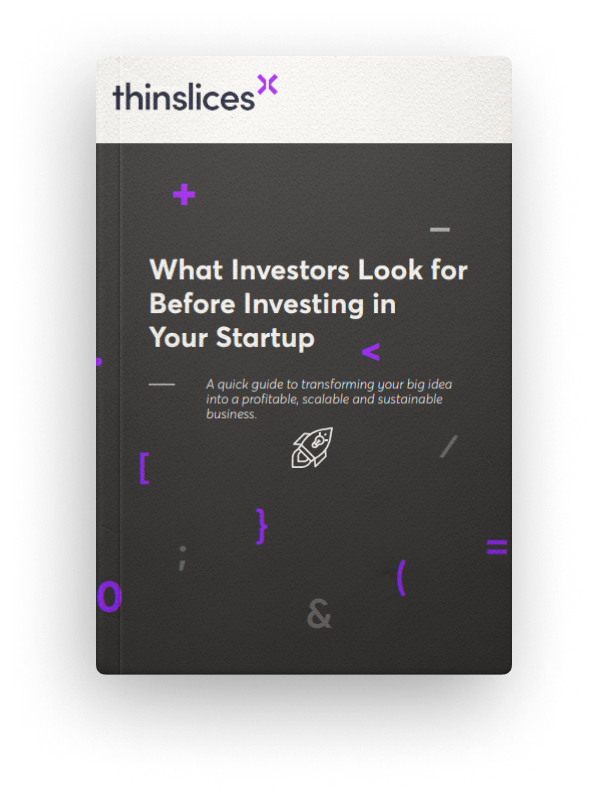
What Investors Look for Before Investing in Your Startup

Find out more ->

pitching-your-startup-ebook-resources

How To Pitch Your Startup - Powered By Product Design

Find out more ->

The Essential Role Of Trust In Product Development 4

The Essential Role Of Trust In Product Development

Find out more ->