Insights tagged "Trending"

  • AI browser agents: the gap between demo and production
    Tudor Iordache - 10 Jun 2026
    Browser-use AI agents are most valuable when they are a component in a larger system, not when they are deployed as a complete solution. The teams getting durable value treat the agent as a navigation layer feeding into deterministic downstream processes, with serious operational infrastructure around it. The teams that struggle deploy the agent and expect the rest of the system to follow.
  • Edge AI inference: what it means for your product architecture
    Tudor Iordache - 2 Jun 2026
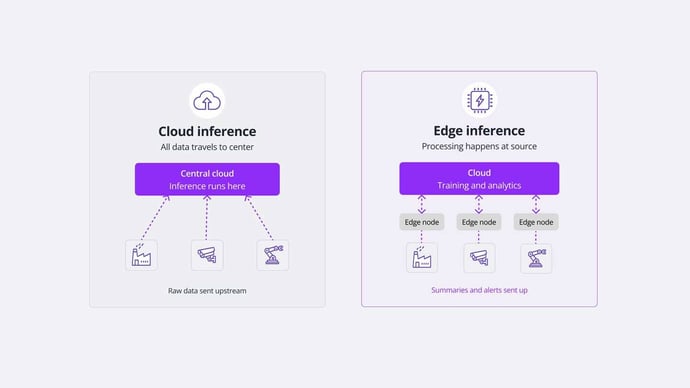
    AI inference is moving toward the edge because centralized cloud processing introduces latency, egress costs and data residency constraints that compound as inference volume scales. The decision of where to run inference is determined by five workload characteristics: latency tolerance, data volume, compliance requirements, operational resilience needs and cost profile over time. Most production architectures resolve this by splitting responsibilities between cloud and edge, with the operational overhead of managing a distributed inference fleet remaining the primary factor that determines when the transition is viable.
  • The agentic AI starter kit: minimum viable setup for software teams
    Ionut Lomer - 20 May 2026
    Part 2 of 2. This article follows "Claude is not a chatbot: how to use it on real software projects". Agentic AI is like a new machine. A powerful one. But nobody shipped a user manual with it, and every company in the room is currently trying to figure out which button does what. That is the honest state of things in 2026. Anthropic is shipping new features faster than most teams can absorb them. Documentation reads like walking into a store where every shelf has something new and there is no map. The instinct is to explore everything. That instinct is the problem.
  • What Gartner's 2026 tech trends mean for product teams, not CIOs
    Tudor Iordache - 12 May 2026
    Of Gartner's ten 2026 technology trends, four matter disproportionately for product builders: AI-native development, multiagent systems, domain-specific language models, and digital trust. AI-assisted development works only when grounded in structured context, not clever prompts. Multiagent systems are already in 80% of enterprise apps shipped in Q1 2026, yet 88% of agent pilots never reach production, because the bottleneck is product design, not model quality. Domain-specific models outperform general ones for targeted use cases, but only when a pre-development business case has set accuracy and cost thresholds. Trust is becoming a visible part of the product surface, and in regulated and European markets it is now a baseline requirement. Teams that win in 2026 will pick the two or three trends that intersect with their roadmap, not try to act on all ten. Gartner published its top strategic technology trends for 2026 last October, presenting ten trends grouped under three themes: The Architect, The Synthesist, and The Vanguard. The recap wave that followed was predictable. Within weeks, dozens of consultancies and vendors had published their own breakdowns, each walking through the same ten trends with broadly similar commentary aimed at the same audience: enterprise CIOs.
  • Why code quality still matters in the era of AI
    Iulian Gioada - 4 Dec 2025
    I'll be honest: when I first started working with AI coding assistants, I thought we were on the verge of making code quality debates obsolete. Why obsess over clean architecture and test coverage when AI could just churn out whatever we needed? I was spectacularly wrong. After spending the last year working with these tools in production environments, and seeing both the incredible wins and the spectacular failures, I've come to realize something fundamental:
  • AI Agents Promise Scale, But Most Teams Will Miss The Mark
    Ilie Ghiciuc - 10 Jul 2025
    Gartner names it 2025’s top AI trend, but only teams with scope, governance, and value metrics will succeed. Picture an invoice-scanning bot that doesn’t just flag anomalies—it renegotiates payment terms, logs the change in SAP and emails the supplier before finance gets its first coffee. That leap from “copilot” to fully autonomous colleague is what Gartner dubs Agentic AI, the top strategic technology trend for 2025.
  • Why Execution Is the New Differentiator in Private Equity’s Tech Deals
    Paula Cristea - 4 Jun 2025
    In 2025, access to capital is table stakes. What distinguishes private equity sponsors now is execution. With deal volume returning and transaction size trending upward, value creation depends less on financial engineering and more on the ability to deliver results. Traditional levers such as cost reduction, integration, and restructuring have hit their limits, particularly in technology sectors marked by fast-moving innovation and systemic complexity. Execution has become the decisive edge. Strategy still matters, but it's the speed and precision of implementation that define outcomes.

RESOURCES

Unlock Knowledge and Inspiration with Our Ebooks

what-investors-look-for-resources

What Investors Look for Before Investing in Your Startup

Find out more ->

pitching-your-startup-ebook-resources

How To Pitch Your Startup - Powered By Product Design

Find out more ->

The Essential Role Of Trust In Product Development 4

The Essential Role Of Trust In Product Development

Find out more ->